
5 min
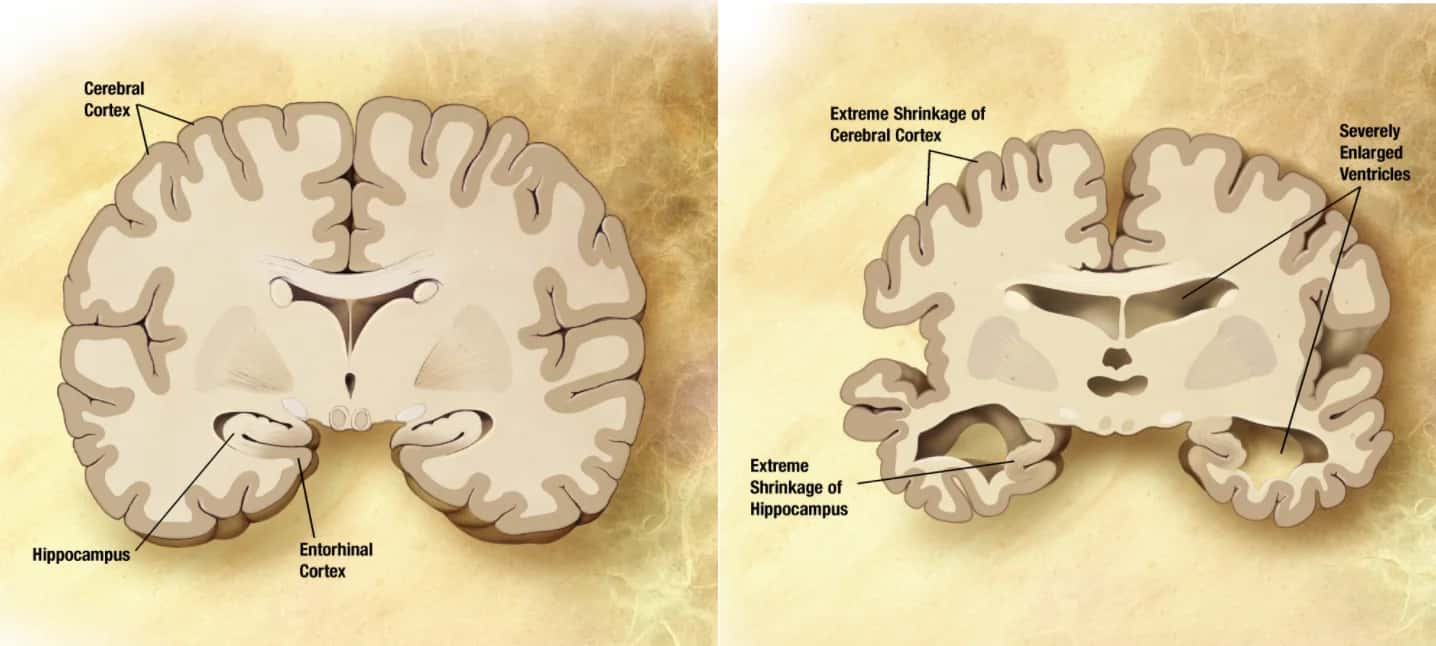
[caption id="attachment_24044" align="aligncenter" width="1436"] Combination of two brain diagrams in one for comparison. In the left normal brain, in the right brain of a person with Alzheimer's disease.[/caption]
Noted Indian scientists from the National Brain Research Centre (NBRC), and Neuroimaging and Neurospectroscopy Laboratory (NINS) are using artificial intelligence to develop a smart system to predict Alzheimer's disease early.
According to a report in Journal of Alzheimer's Disease, Professor Pravat Mandal are working to develop a model to map metabolic patterns in different brain regions in healthy and pathological conditions.
Alzheimer's is the most common form of dementia, a general term for memory loss and other cognitive abilities serious enough to interfere with daily life. Alzheimer's disease accounts for 60 to 80 percent of dementia cases. The greatest known risk factor is increasing age, and the majority of people with Alzheimer's are 65 and older. But Alzheimer's is not just a disease of old age. Approximately 200,000 Americans under the age of 65 have younger-onset Alzheimer’s disease
"Laboratory research and longitudinal clinical studies have helped to reveal various information about the disease but the exact causal process is not known yet. Patterns from alteration of neurochemicals, (for example, glutathione depletion) hippocampal atrophy, and brain effective connectivity loss as well as associated behavioural changes have generated important characteristics features. These imaging-based readouts and neuropsychological outcomes along with supervised clinical review are critical for developing a comprehensive artificial intelligence strategy for early predictive AD diagnosis and therapeutic development," wrote Dr Mandal.
https://www.youtube.com/watch?v=rOfpzYkRAc4
According to a report, Dr Mandal, along with a NBRC colleague Deepika Shukla are developing an integrated framework called GAURI. The framework will have statistical and predictive diagnostic capability which in turn could indicate brain chemical changes in the brain.
“We will use the data information from a large data set from various diagnosis procedures to create an artificial intelligent system, which would help with the diagnosis of a new unknown case of Alzheimer’s disease using machine learning approaches... Such an integrated multi-modal predictive diagnostic system for Alzheimer’s disease diagnosis would aid the clinician in early differential diagnostics to deliver the most appropriate treatment,” Dr Mandal told the newspaper.
A World Health Organisation report says that they hope AI and machine learning can reverse "two decades of failed experimental therapies for Alzheimer’s disease."
Combination of two brain diagrams in one for comparison. In the left normal brain, in the right brain of a person with Alzheimer's disease.[/caption]
Noted Indian scientists from the National Brain Research Centre (NBRC), and Neuroimaging and Neurospectroscopy Laboratory (NINS) are using artificial intelligence to develop a smart system to predict Alzheimer's disease early.
According to a report in Journal of Alzheimer's Disease, Professor Pravat Mandal are working to develop a model to map metabolic patterns in different brain regions in healthy and pathological conditions.
Alzheimer's is the most common form of dementia, a general term for memory loss and other cognitive abilities serious enough to interfere with daily life. Alzheimer's disease accounts for 60 to 80 percent of dementia cases. The greatest known risk factor is increasing age, and the majority of people with Alzheimer's are 65 and older. But Alzheimer's is not just a disease of old age. Approximately 200,000 Americans under the age of 65 have younger-onset Alzheimer’s disease
"Laboratory research and longitudinal clinical studies have helped to reveal various information about the disease but the exact causal process is not known yet. Patterns from alteration of neurochemicals, (for example, glutathione depletion) hippocampal atrophy, and brain effective connectivity loss as well as associated behavioural changes have generated important characteristics features. These imaging-based readouts and neuropsychological outcomes along with supervised clinical review are critical for developing a comprehensive artificial intelligence strategy for early predictive AD diagnosis and therapeutic development," wrote Dr Mandal.
https://www.youtube.com/watch?v=rOfpzYkRAc4
According to a report, Dr Mandal, along with a NBRC colleague Deepika Shukla are developing an integrated framework called GAURI. The framework will have statistical and predictive diagnostic capability which in turn could indicate brain chemical changes in the brain.
“We will use the data information from a large data set from various diagnosis procedures to create an artificial intelligent system, which would help with the diagnosis of a new unknown case of Alzheimer’s disease using machine learning approaches... Such an integrated multi-modal predictive diagnostic system for Alzheimer’s disease diagnosis would aid the clinician in early differential diagnostics to deliver the most appropriate treatment,” Dr Mandal told the newspaper.
A World Health Organisation report says that they hope AI and machine learning can reverse "two decades of failed experimental therapies for Alzheimer’s disease."- OpenAI's Codex Helps in Aerodynamic Engineering for Mazda
- Bengaluru Accounts for 34% of India's FDE Talent: Report
- 84% See AI Productivity Gains, but Only 10% Allow Agent Autonomy: TCS Study
- Snowflake Introduces Business Ontology, Cortex AI Gateway to Bring AI Agents Into Enterprise Workflows
- Three Members Behind Claude Code Leave Anthropic Within 10 Days
- Happiest Minds Q2 Revenue Rises 12.5%; AI Revenue Figure Remains Undisclosed